

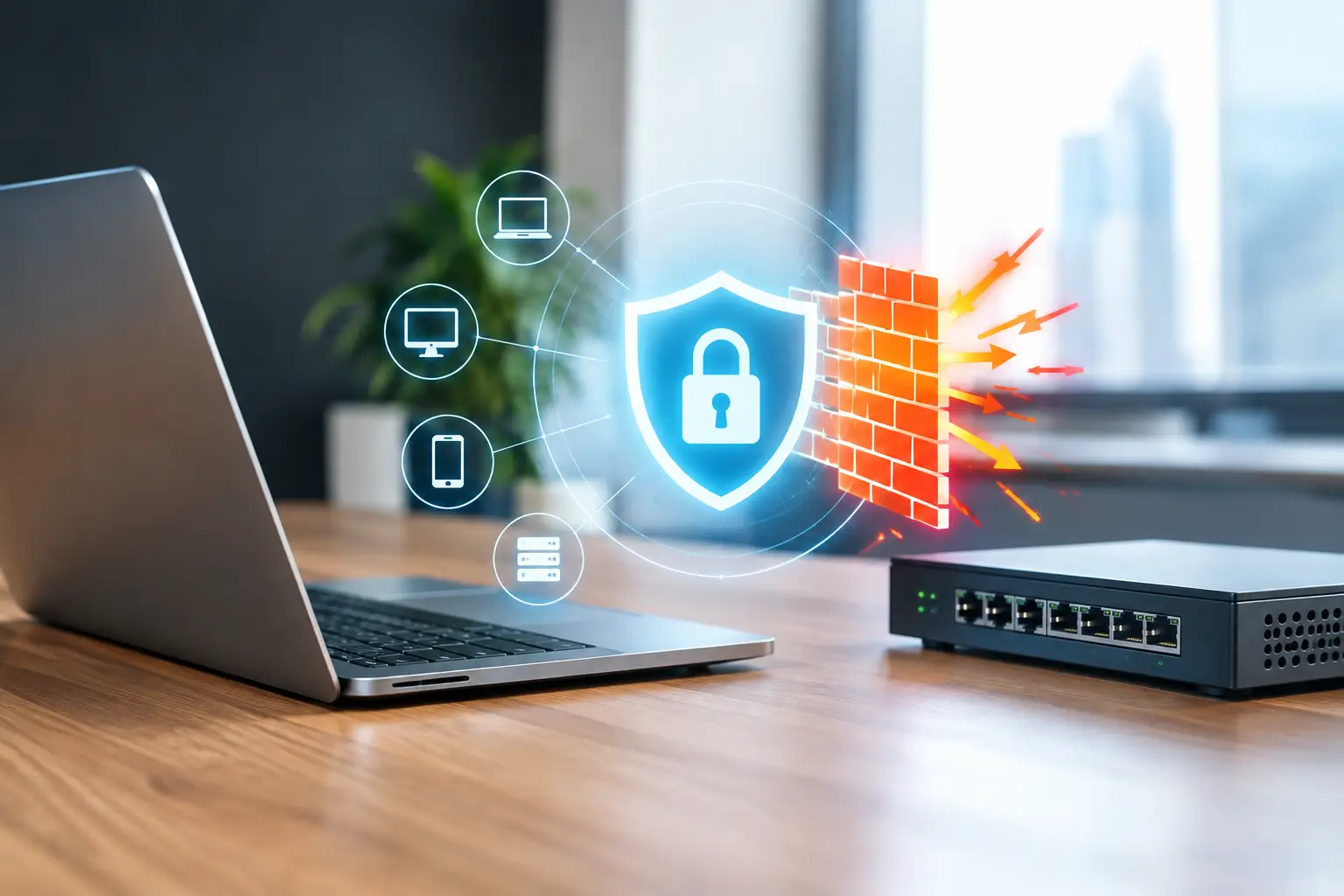
A firewall can be installed in an afternoon. Keeping it properly configured, monitored, updated, and ready to block a real threat is a daily responsibility. That distinction should shape every managed firewall service review. For Miami and South Florida businesses, the right provider is not simply selling a security appliance. They are taking accountability for a critical point of control between your network, your users, and the internet.
A managed firewall service can reduce the burden on internal staff, but only when the service has clear ownership, real visibility, and a response process that works outside normal business hours. Before signing a contract, evaluate how the provider operates when something changes, fails, or looks suspicious.
What a Managed Firewall Service Should Actually Cover
The term “managed firewall” can mean very different things from one IT provider to another. In its weakest form, it may mean the provider installed a firewall and will help if you call. In a service relationship that supports business continuity, management should be ongoing and proactive.
At a minimum, the provider should maintain the firewall software, apply appropriate security updates, monitor device health, review meaningful alerts, and keep configurations documented. They should also manage access rules as your business changes. When a new application, location, vendor connection, or remote employee needs access, that request should be handled with an understanding of the security and operational impact.
Good management also includes network awareness. A firewall cannot protect a business effectively if the provider does not understand the devices, services, internet connections, cloud applications, phone systems, and remote access methods behind it. This matters especially for organizations that rely on VoIP, surveillance systems, guest WiFi, cloud platforms, or multiple sites.
Managed Firewall Service Review: Questions That Reveal Quality
A proposal can sound comprehensive while leaving the most important responsibilities undefined. Ask direct questions and look for direct answers. Who monitors alerts? What happens after an alert is identified? Are configuration changes included? Is after-hours response available? How often is the environment reviewed with your team?
The answers should describe a process, not just a product feature. A firewall may generate thousands of events, many of which are harmless or irrelevant. The value of managed service comes from knowing which events require investigation, which need immediate action, and when your business should be notified.
Monitoring is not the same as response
Continuous monitoring is valuable, but it is only the first step. A provider should explain whether alerts are automatically ticketed, reviewed by technicians, escalated to security personnel, or merely retained in logs for later review. If suspicious traffic is detected at 2:00 a.m., your business needs to know whether someone can contain the issue or whether it waits until the next business day.
Response expectations should be documented in practical terms. For example, a critical event may require immediate investigation and a phone call to an authorized contact, while a low-priority software update may be scheduled during a maintenance window. Not every alert deserves an emergency response. What matters is that the provider has defined priorities and follows them consistently.
Configuration management deserves close attention
Most firewall problems are not caused by a missing box in the server room. They come from unmanaged changes, overly broad access rules, outdated remote access settings, and exceptions that were created for a short-term need and never removed.
Ask how changes are requested, approved, documented, and tested. You should also ask whether the provider reviews existing rules for unnecessary exposure. A company that can quickly add an access rule but cannot explain why it remains in place months later is not delivering strong security management.
For businesses with compliance requirements, configuration records and change history may also support audits, incident investigations, or insurance questionnaires. Even businesses without formal compliance obligations benefit from knowing exactly who has access to critical systems and why.
Look Beyond the Firewall Appliance
A managed firewall is one layer of protection, not a complete cybersecurity program. It can help control traffic, segment networks, support secure remote access, and block known threats. It cannot replace sound identity controls, employee awareness, reliable backups, endpoint protection, or a tested recovery plan.
This is where a full-service technology partner has an advantage. If a firewall alert relates to a compromised workstation, a failed internet connection, a remote employee, or a cloud application, the provider should be able to investigate the surrounding environment. Handing the problem from a firewall vendor to a separate network vendor and then to another IT company wastes time when the business is already under pressure.
For a Miami office, restaurant group, property manager, or professional services firm, consider how the firewall connects to the rest of the operation. Does it protect the same network that carries business phones? Does it separate staff devices from guest WiFi? Can it support secure access to surveillance systems without exposing those systems publicly? These are business continuity questions as much as security questions.
Evaluate Reporting for Business Value
Reports should help leadership make decisions, not create more paperwork. A useful monthly or quarterly review explains the condition of the firewall, major security events, resolved issues, pending risks, software status, and recommended actions. It should be understandable without a networking background.
Be cautious of reports that contain pages of raw log entries but no interpretation. A high volume of blocked attempts may be normal internet background activity. A smaller number of unusual login attempts, unauthorized connection requests, or recurring policy violations could deserve much more attention. Your provider should distinguish between noise and risk.
Reporting is also an opportunity to plan. If internet usage is growing, remote access is becoming more common, or a location is adding cameras and wireless devices, your firewall policy and capacity may need to change. Proactive conversations prevent security from becoming an afterthought during an expansion or emergency project.
Understand What Is Included and What Costs Extra
Managed firewall pricing is often based on the firewall model, number of locations, licensing, monitoring level, support coverage, and complexity of the network. A lower monthly price may exclude important work such as rule changes, after-hours response, hardware replacement coordination, or onsite support.
There is no single best pricing model for every business. A small office with a straightforward network may need a focused plan with predictable support. A multi-site organization with remote workers, cloud applications, phones, cameras, and guest networks may need more active management and a higher service level.
Ask for a clear explanation of recurring fees, hardware and license terms, installation costs, replacement options, and out-of-scope labor. The goal is not to avoid every additional charge. The goal is to avoid discovering, during an outage or security event, that the service you assumed was included is billed separately or unavailable after hours.
Local Support Changes the Experience
Remote management is central to modern firewall service, but local support still matters. When an internet circuit fails, equipment needs replacement, a site is opening, or network changes affect phones and WiFi, an accessible provider can coordinate the work from diagnosis through resolution.
For South Florida organizations, local knowledge can be especially useful during office moves, event deployments, hurricane preparation, and connectivity disruptions. A provider that understands your locations and infrastructure can make faster, more informed decisions than a help desk working from a generic account record.
CompuSOURCE approaches managed technology as an accountable operational service, connecting firewall oversight with network support, business communications, backup planning, and responsive technical assistance. That broader view is valuable when security issues overlap with everyday technology problems.
Choose Accountability, Not Just a Device
The best managed firewall service should leave your team with fewer blind spots and clearer options when something goes wrong. You should know who is watching the environment, who can make changes, how critical events are handled, and how the service supports the systems your business relies on every day.
A firewall is most valuable when it becomes part of a well-managed technology foundation – one that gives your team confidence to operate, serve customers, and grow without carrying the full security burden alone.
Comments are closed